Antimony and gold project
Exploration today. Further development only on the basis of results.
The aim of the Trojárová project is to gain a better understanding of the antimony and gold deposit and to evaluate the conditions for its possible future use.
Geological data are only one part of the decision. Environmental conditions, technical options and economic feasibility are equally important.
What the geological data say
According to a technical report prepared under the Canadian standard NI 43-101, the estimated mineral resource in the inferred category (the lowest confidence category, not reserves) is approximately 6.5 million tonnes of mineralised rock with an average grade of 1.02% Sb and 1.06 g/t Au.
- of mineralised rock in the estimated resource
- 6.5Mt
- average antimony grade
- 1.02% Sb
- average gold grade
- 1.06g/t Au
This is an Inferred Mineral Resource. These figures do not represent mineable reserves, confirmed mine economics or a decision to mine.
Why antimony matters
Antimony is one of the European Union's critical raw materials (Annex II to Regulation (EU) 2024/1252). If further studies confirm the environmental, technical and economic feasibility of Trojárová, the project could contribute to diversifying European supply.
However, its potential benefit must be assessed together with the conditions and impacts of its implementation.
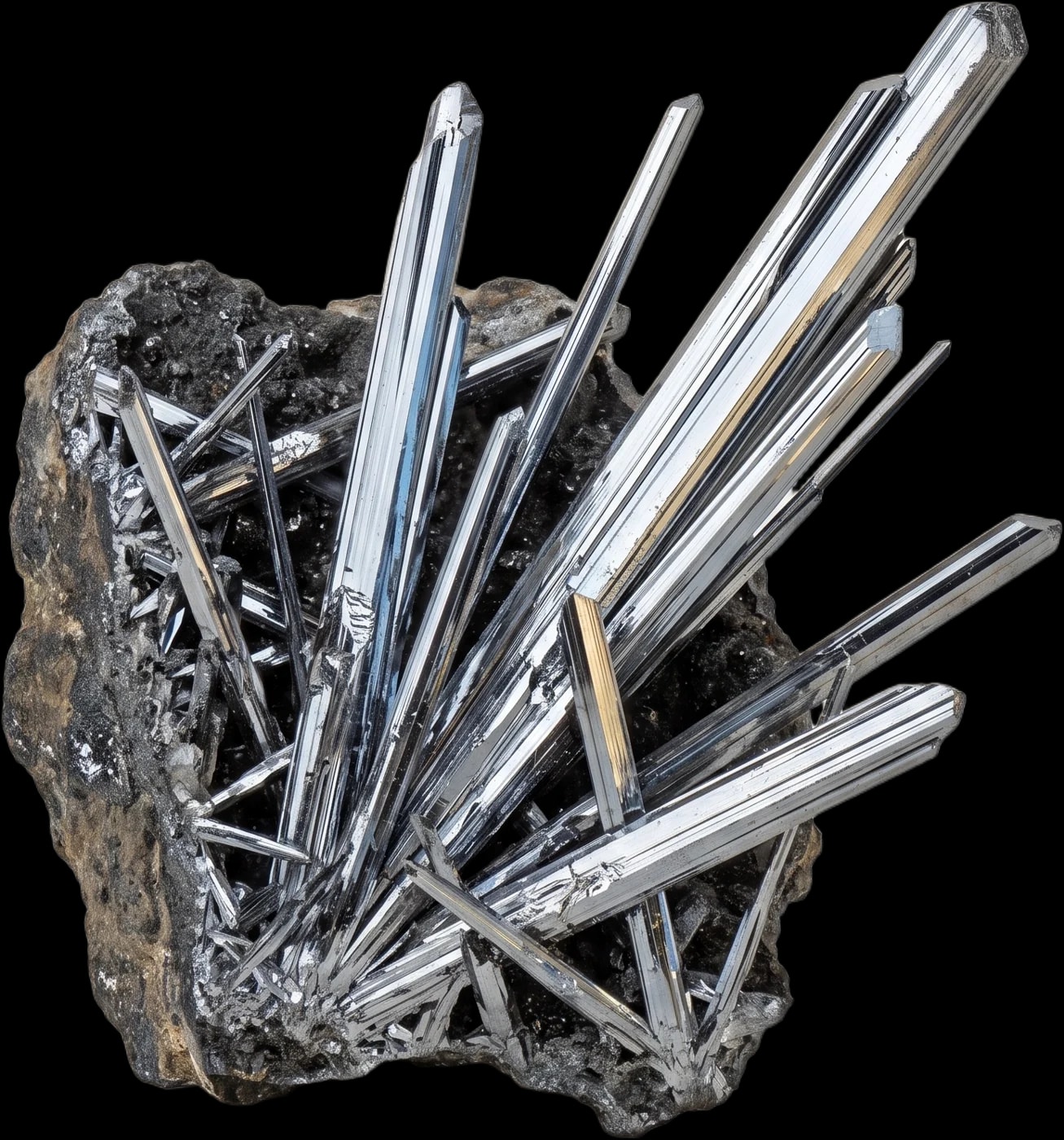
Stibnite, Sb₂S₃. Illustrative photo of the mineral.
The underground concept under assessment
The working technical concept considers underground mining. Further assessment also includes backfilling of mined-out spaces, i.e. using suitable material to fill the underground voids after mining.
The specific backfill method, the properties of the materials used and their environmental suitability must be verified by technical studies. This is a solution under assessment, not an approved technology for a future mine.